Rants and Monologues
Characters who won't shut up, from Joyce, Bernhard, and de Beauvoir to Ellmann and Buckley

My subject here is fiction with long, mainly uninterrupted, perhaps unparagraphed pages representing one character’s thoughts or words. I’m interested in the form more than the content: for me, it’s a writer’s problem and not a theory question.1 So it’s not not: What is stream of consciousness? but: What are the strategies for writing blocks of mainly demented or unreliable and apparently unstoppable speech with minimal breaks?
I’d like to jettison talk about streams of consciousness. Rants and monologues are most interesting when they’re not imagined mainly as windows into the mind or transcriptions of inner life. For example they ruin plots, because nothing much can happen while a character is endlessly talking: they corrode ordinary narrative structure. Long monologues break narrative as well as social decorum: we hear a lot, too much, about just one person, at the expense of other people and the rest of the world. These are strong tools to disrupt normative storytelling.
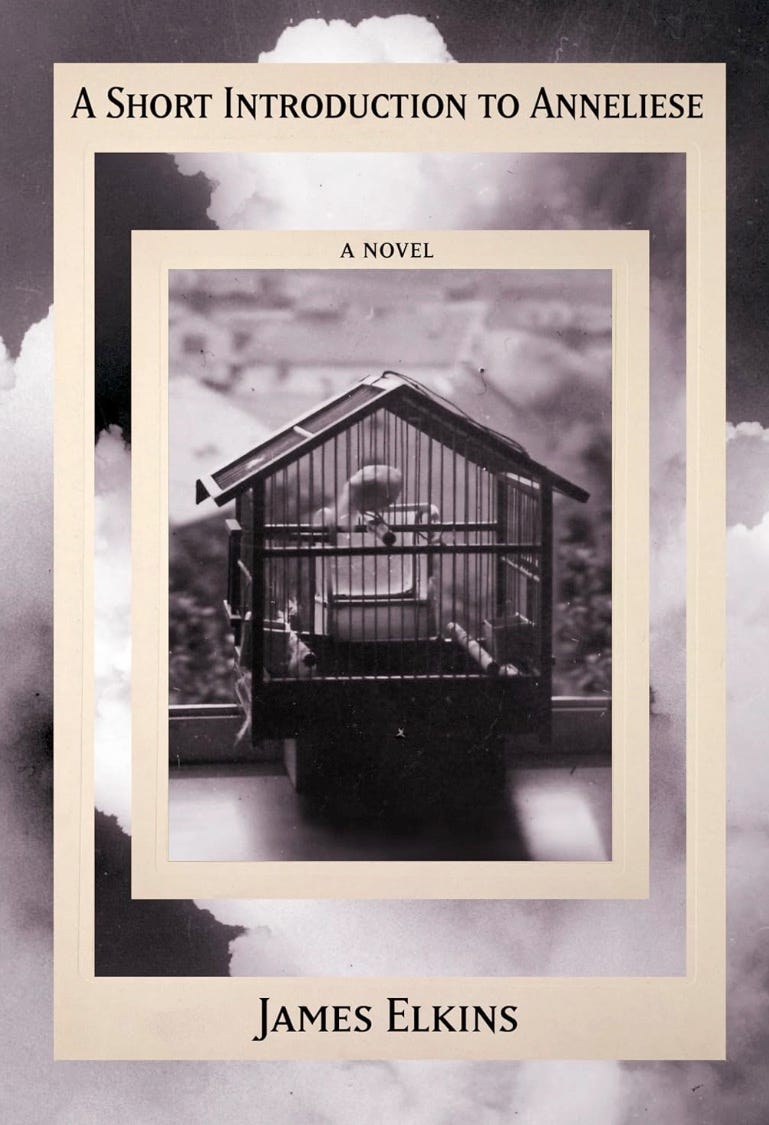
I’m interested in how it might be possible to write a full-length fiction comprised almost exclusively of just one person’s words, even if that person refuses to listen to other people, even if their monologue has no form or direction or reason to stop. My own solution is A Short Introduction to Anneliese, about which more at the end.
Why monologues and rants are different from streams of consciousness
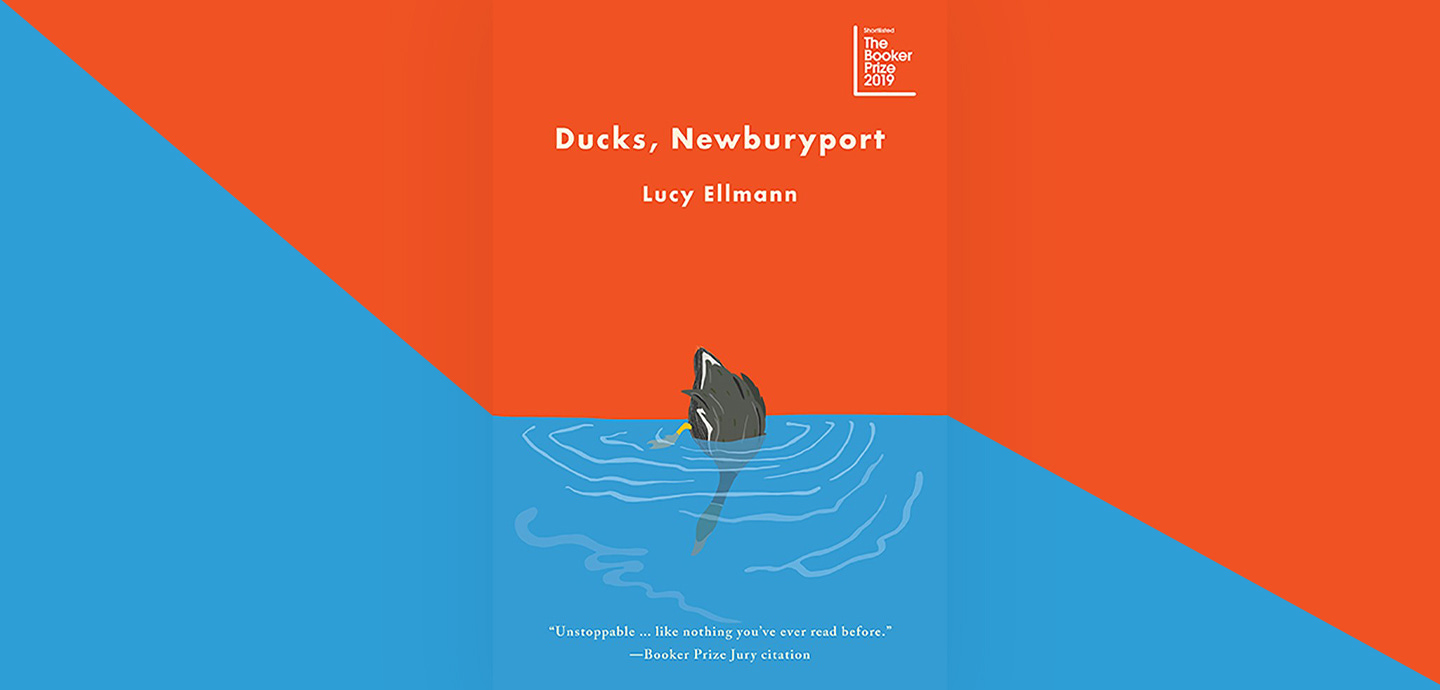
The reviews of Lucy Ellmann’s Ducks, Newburyport tended to make generalized references to the novel’s “single sentence” (it isn’t a sentence) and the narrator’s “stream of consciousness” (it isn’t).2
Grammatically, the narrator’s book-length chain of thoughts is no more a sentence than the one in Mike McCormack’s Solar Bones or Mathias Enard’s Zone: it is a paragraphless run-on sentence, clauses linked by commas. Part of the idea is to register what is called “interior monologue”: the presented contents of consciousness, the continuous string of fragments and impressions chosen in the instant by the narrator. In this sense “interior monologue” is related to the more famous expression “stream of consciousness,” coined by William James, which can break with grammar more definitively, producing fragments and anacoluthons and not only run-on successions of parallel clauses.
The reviews also say that with the exception of a dozen brief passages about the life of a mountain lion, all 1,020 pages take place in the narrator’s mind. For me, they don’t: many, and in the end most, take place in the mind of the implied author. Parul Sehgal says the novel’s form “mimics the way our minds move now” (NYT, September 3, 2019). This is because it toggles “between tabs, between the needs of small children and aging parents, between news of ecological collapse and school shootings while somehow remembering to pay taxes and fold the laundry.” I do not think the actual author, Lucy Ellmann, wanted her readers to spend much time thinking about how the book was written: there’s nothing metafictional in the text, no references to how the narrator might have written everything down, and strangely not even any references to surfing the internet, even though the narrator was clearly surfing all day long to check things, just as the implied author must have done. I find myself thinking about Lucy Ellmann, the book’s actual author, and also about what the critic Wayne Booth called the “implied author,” the person the narrative allows us to imagine writing the book, even though nothing in the narrative leads me to think I’m supposed to be concerned wuth anything except the narrator’s thoughts. It is, I think, impossible not to imagine the implied author writing the book with tabs open to Wikipedia, Google, the OED, and other sources. Yet the avalanche of information we receive is supposedly all recalled from some unspecified earlier time in the day or the narrator’s life when she was surfing.
If the book were intended to represent a literal stream of consciousness, we’d have to be told she is on her phone or her computer at virtually every moment, looking up things she can use. As it is, we’re supposed to imagine that the narrator has done all that poking around before she began the book, and that she just brings all the words and facts to mind without surfing for inspiration or accuracy. I found that conceit unconvincing and unnecessary: why couldn’t we have been told about the scattered minutes and seconds (collectively, the hours) she spends on her phone or computer? Why are the narrator and the author so coy about describing what it’s like to spend so much time surfing? She’s even reticent about informing us when she watches cable television and listens to the radio (p. 190). It’s intrusive, too, when the narrator “remembers” long lists of facts of the sort that can’t plausibly be recalled so precisely (like “the fact that demoic acid is killing birds and seals in Oxnard, Southern California,” p. 249). Things like that were clearly transcribed from a screen by the actual author and the narrator (pp. 266, 678).
I picture the book being written in one pass, with brief stops made many times a page to look things up, augmented by multiple passes for revision, planned repetition, augmentation, and even contradiction. That entire process is meant to be invisible (we’re meant to think only of the narrator, in real time), but it isn’t, because we are compelled to picture it whenever the narrator’s rhythms of reference refer us back to the implied author who wrote them down. This is, in short, an inadequately self-referential narrative, or, to put it the other way around, a narrative inadequately sealed off from references to the conditions of its production in the name of representing a stream of consciousness.
Still, it’s a memorable thousand pages. A solution to these issues, I think, is to give up the idea that a monologue or rant represents the stream of consciousness. The motive for abandoning the flow of consciousness isn’t to update modernism: it’s to focus on the rant itself, its language, its structure. Then Ducks, Newburyport becomes an exercise in interrupted writing, association, and research, rather than a picture of thinking.
I am aware that there’s a long tradition of arguments against the idea that stream of consciousness represents actual thoughts, including Paul Ricoeur’s emphasis on the construction of narrative and Gérard Genette’s explorations of mediation. Dorrit Cohn and Brian McHale have also argued that stream of consciousness is a literary convention. But all this needs re-emphasizing given the critical reception of Ducks, Newburyport and the implication, in the book, that we’re following the narrator’s thoughts. I would rather read books like Ducks, Newburyport as negotiations between the avowed narrator (who never checks the internet) and the implied author (who always does, and whose consciousness is therefore more fragmented, and interrupted in more interesting ways, than her character’s).
The monologue in Simone de Beauvoir’s “Monologue” talks continuously, except for brief passages where she repeats what people say to her on the phone. When her estranged mother calls her, we get this:
“Was it you who rang me? … It surprised me too but after all on a night like this it could happen you might think of my grief and say to yourself that a mother and daughter can’t be on bad terms all their lives long; above all since I really can’t see what you can possibly blame me for… Don’t shout like that…”
She has hung up. She wants peace.
Two curious things happen here. We get to hear a snippet of Murielle’s mother’s rants, enough to wonder if the mother is the model. And we are momentarily relieved of the necessity of listening to Murielle’s rant, because she omits herself from her transcript. What did she say during those last two ellipses? Those interruptions move the monologue from the character’s mouth and mind to the implied author’s: in that sense monologues are fragile, even though they seem unstoppably strong.

Writing very long rants
This isn’t an easy thing to do. Beckett did, in the novel trilogy and especially The Unnamable. Thomas Bernhard did, and he’s had many imitators. Monologues (like Beckett’s) become rants (like Bernhard’s) when they’re perfused with endless anger, injustice, hopelessness, obsession, irritation, or prejudice. In recent incarnations those virtriolic moods can be tempered, less like Bernhard and more like Beckett. Emily Hall’s The Longcut, for example, has a calmer voice than any of Bernhard’s fictions. (I imagine readers of The Longcut may not see Bernhard in it, but his influence is very broad and often unacknowledged. It’s often useful to ask who first started a given way of writing: the question can lead to unexpected insights into familiar conventions.) But it is not easy to keep up the energy of a demented, irresolvable frame of mind.
Another difficulty with writing apparently endless pages of rant is to figure out what to do with the person who’s being addressed. If it’s a diary or an inner monologue the problem is solved, but at the expense of a hot-house interiority. If the character is speaking, how do they manage to silence their listener? And how long will a reader pay attention if they’re not given any information about the listener’s feelings?
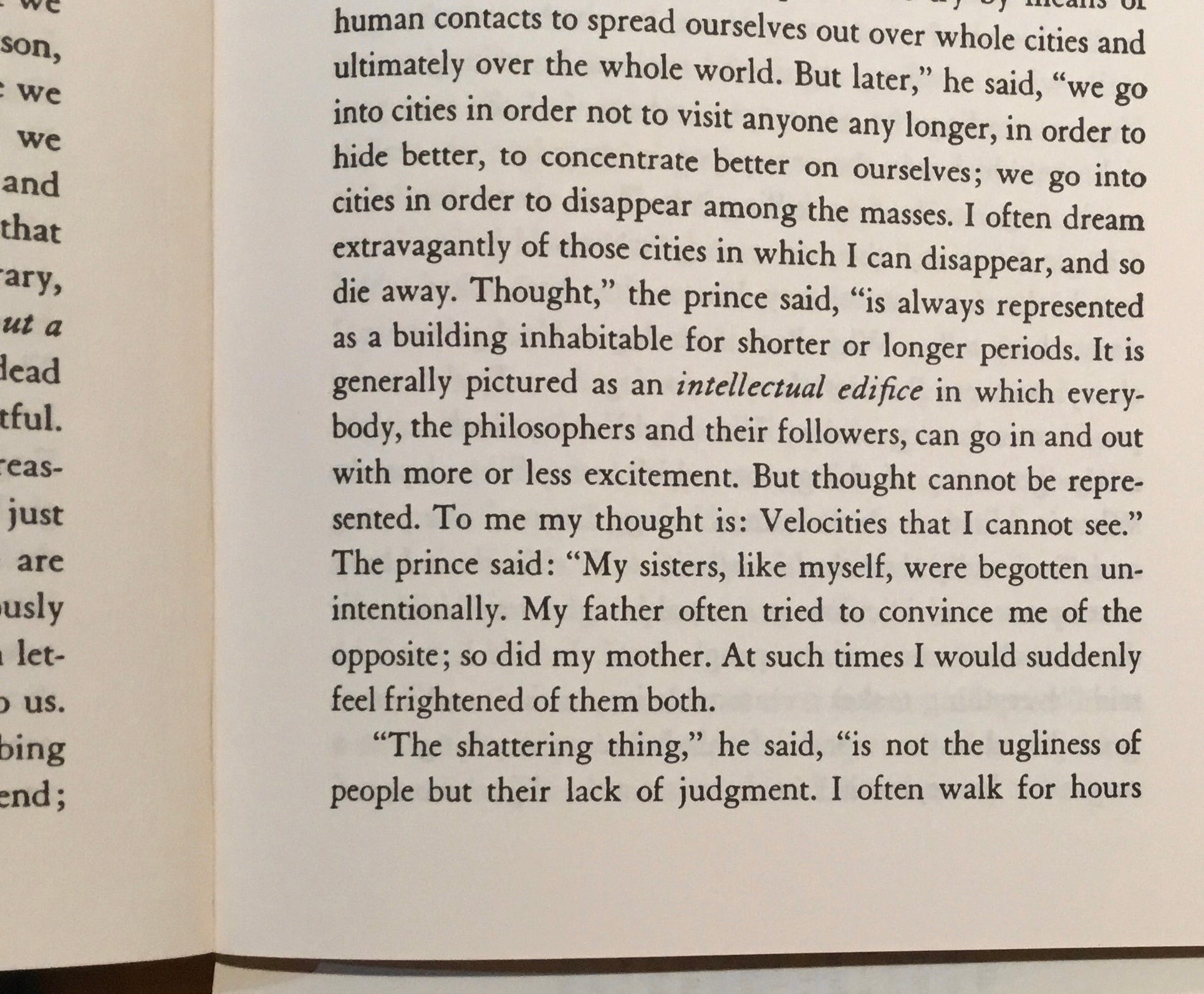
The prince in Bernhard’s Gargoyles silences his listeners by the fact of being a prince, and being expected to speak as long as he wishes. Bernhard breaks up the pages by continuously quoting the prince, and sometimes breaking paragraphs even though nothing has changed and the prince is still speaking:
Jonathan Buckley’s Tell is a good recent example. It’s a series of five interviews with a filmmaker about a man who has disappeared. Once a page, on average, the narrator’s testimony stops, there’s a double-line break, and a notation like “[Indistinct]” or, occasionally, “[Pause].”
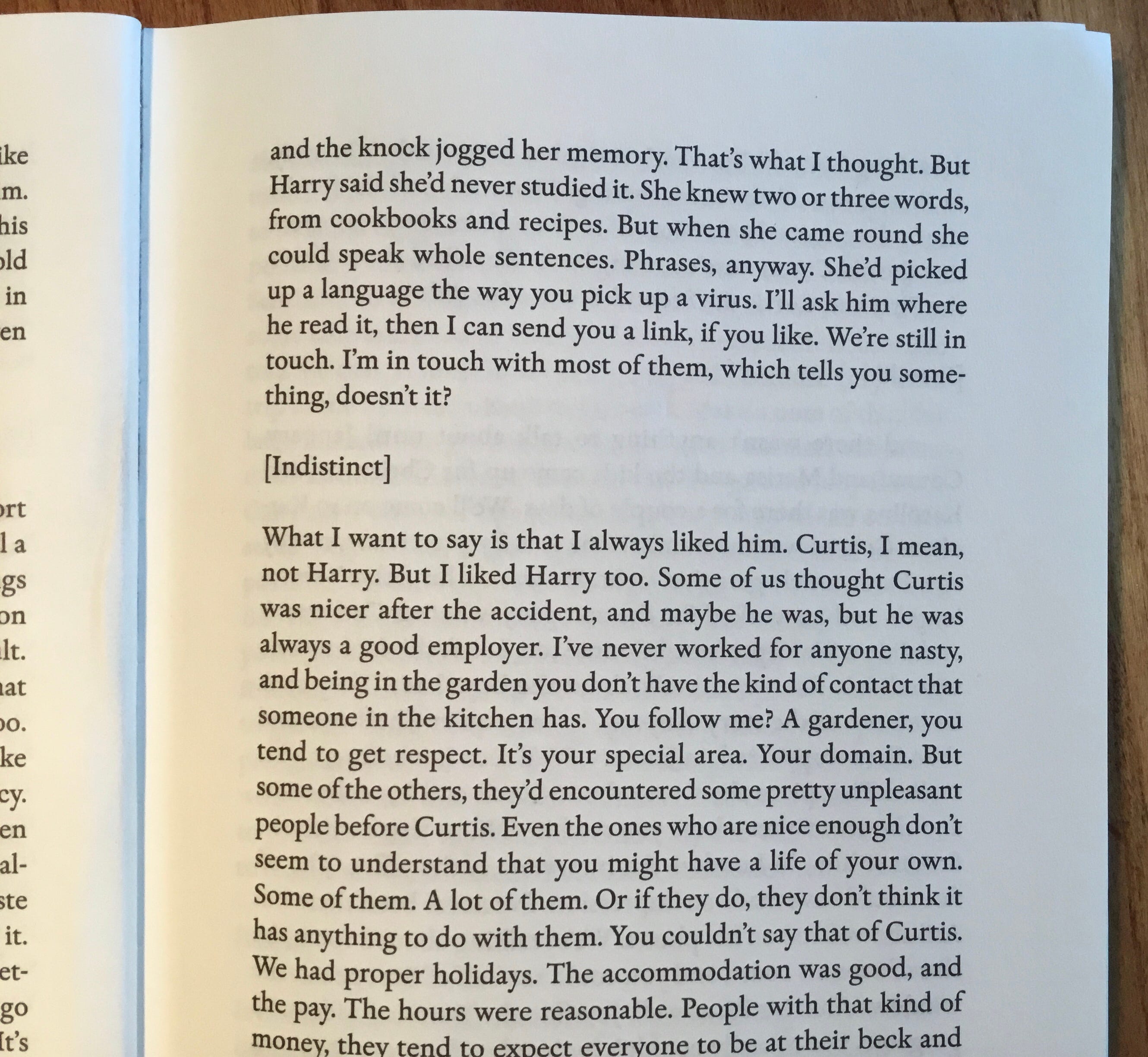
Buckley rings the changes on this device: sometimes it seems the recording didn’t pick up everything the witness said, and other times the filmmaker asks a question that’s not recorded. Most of the time Buckley ignores his own device, and so do we as readers.
I think it’s more interesting to try to tell something about the character of the person who’s listening, because then there’s a very strong contrast between the main narrator, about whom we know altogether too much, and the listener, who is only known through very short contributions.
In A Short Introduction to Anneliese, Samuel, the one who’s subjected to the rant, is actually the main character, although he is not yet known to the reader. When he interrupts he usually manages to say something potentially interesting before he’s cut off by Anneliese, whose relentless monologue goes on for pages at a time. The book began as an ordinary give-and-take conversation, but Anneliese took over, and I searched for ways to shrink Samuel’s share. In order to keep him as silent as possible and give Anneliese as much time as I could, I took his speeches and put them in her mouth. She anticipates what he is thinking and corrects him before he’s spoken. Several times she even announces that he doesn’t need to talk because she can explain things so much better that he ever could. (I got this idea from a strange dinner I had with Susan Sontag, who mentioned a book I’d written to a friend of hers, and then wouldn’t let me explain it, because, as she said, she could do so much better a job than I could.)
I think Anneliese’s rant and Samuel’s abbreviated interruptions may be the longest such exchange in fiction. The scraps we learn about Samuel accumulate slowly and never amount to a full portrait.
Rants that are not pleasant
Molly Bloom’s monologue is famously ecstatic, and Ducks, Newburyport is consistently entertaining and plausible in its diversions and quirks. The voice in The Unnamable is curiously detached from its literally existential danger, and therefore hypnotic as well as tedious. Emily Hall’s voice in The Longcut is quizzical and appealing in her indecisions.
In every monologue I know, the narrator is fundamentally sympathetic. That’s arguably a weakness of Ducks, Newburyport, because even after a thousand pages the narrator is only mildly and infrequently either fascinating or annoying, and that comes to seem implausible. Again Bernhard points the way: why not write a rebarbative, incomprehensible, unpleasant monologue, and make it as long as possible? That way the narrator’s hold on us is tenuous, and the reasons why the listener should run away pile up with each new page. It’s an interesting writing challenge: an unattractive voice, plagued by uncontrolled and unappeasable problems, a personality that does not develop or resolve (that’s the rant part), and yet can somehow hold a listener’s attention for a very long time.
What makes this a step beyond Bernhard is simply its length. Bernhard never wrote a long book, and it’s often been noticed that his books can be oddly self-similar. Like some of Bolaño’s, Bernhard’s books can seem to be excerpts from one single lifelong conversation. Bernhard somehow assessed the limits of each rant, even though there’s seldom anything in his plots that would legislate a page limit. that puzzle made me curious what would happen if the short-book limit is transgressed, and the rant continues—as its own logic suggests it should. A Short Introduction to Anneliese is the result.
If anyone has interesting examples of monologues that nearly silence their listeners, or rants that aren’t pleasant and yet continue at length, or any other strategies for extending and exploring the rant, I’d be interested to hear.
I have another post, also for writers, on how to manage long monologues that won’t remind readers too insistently of Bernhard.
I remember in the 80’s when I was an inexperienced girl of thirteen, I went to Palm Springs with my neighbor, who was a bit older, for Spring Break. We were picked up by some older men on the strip and we went off with them in their SUV. I started to get nervous, sensing that I was in over my head, so I started to talk without stopping for what must have been over four hours. It was very rant like, but I have no memory of what I said. I just remember everyone in the group commenting on the fact that I was talking and encouraging me to stop but I wouldn’t, even when my neighbor split off with one of the men and I was left alone with another who took his shirt off and lay down next to me - still I talked. Nothing happened with the man and I finally stopped talking once we left.
The idea of a speaker knowing what a person will say to them beforehand and responding to that actually comes up in a passage of Italo Calvino’s Invisible Cities, where it’s mentioned that Kublai Khan and Marco Polo have entire conversations by just imagining what the other would say. Similarly, most of the book is just Marco Polo describing the cities he’s seen, even if that is quite different from the kind of rant described here.